
McDowell County Arrest Feed Options
McDowell County posts no browser-based arrest list on its official sites. The McDowell County Sheriff's Office site points to a mobile app instead. The Apple listing for that app mentions inmate search. The county site also confirms the sheriff runs the jail. Neither site offers a same-day feed or a multi-day arrest blotter. Private lists are not the county record. A missing online name proves nothing about whether a booking occurred.
Think of the two windows as access paths rather than official archives. The app comes closest to a county-run online search. When a result seems off, detention staff can point you to the right public channel. A written request can reach the booking record itself. For same-day checks, the 24 Hour Arrests page lays out the steps. The wider Arrest Log handles multi-day searches and older records.
| Window | Official route | Key limit |
|---|---|---|
| Same day | Sheriff app and detention contact | No confirmed public 24-hour feed or posting schedule |
| Several days | App, individual records, and eCourts | No official blotter or confirmed app archive depth |
| Older records | Sheriff, Clerk, and records schedule | Retention does not guarantee online access |
Arrested Today in McDowell County
A booking made today rarely appears in a search right away. Intake covers identity checks, property inventory, charge entry, a bond decision, and cell placement. The app description mentions inmate search. It says nothing about refresh rates, rolling days, photos, or how long released people stay listed. Search the full name. Try spelling variants too. Match age, agency, booking date, or an identifier before trusting any result.
When the app leaves doubt, call detention at 828-652-2236. Ask how to verify current public custody details. The main line is 828-652-2235. Court entries run on a different schedule and describe case activity, not a live jail bed. For release or transfer notices, the VINELink Check page explains North Carolina's notification route. The official Sheriff app listing names the agency and describes its inmate search feature.
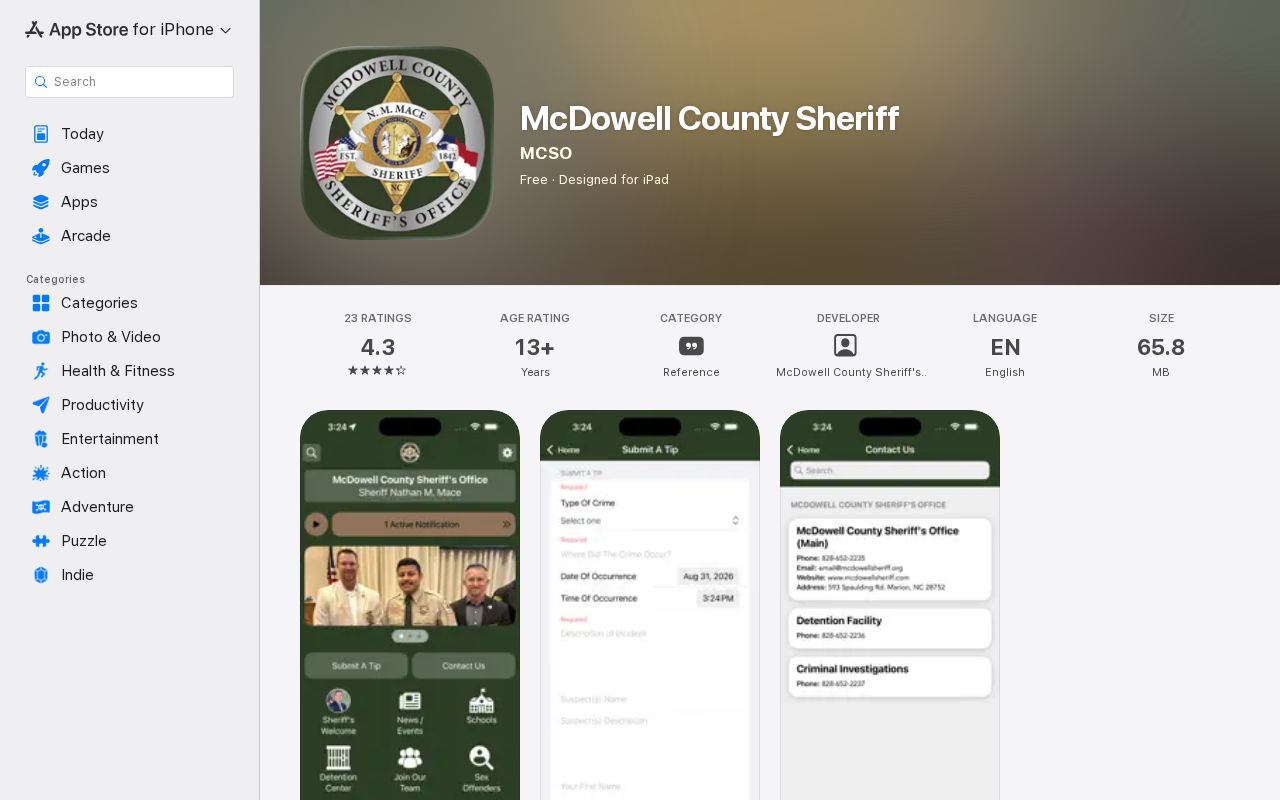
The app listing itself confirms the search channel, though every result still needs an identity and custody check.
Search the McDowell Arrest Roster
The official roster route runs through the app first. The sheriff's website posts no standalone roster, and its detention page covers visits and deposits rather than bookings. Apple plainly describes inmate search. Google Play lists contacts, alerts, maps, tips, and public-safety posts. Neither store page promises booking photos, charges, bond amounts, or an archive span. Trust only what the live result actually states.
| Field | Verified status | Use |
|---|---|---|
| Name | Inmate search confirmed; exact controls unknown | Try the legal name and check other identifiers |
| Custody status | May appear in jail or VINE results | Confirm held, released, or transferred |
| Date, agency, charges, bond | Not confirmed by app listings | Use displayed data or request the record |
| Booking photograph | Not confirmed | Ask the custodian rather than assuming |
A sound roster search follows this order:
- Open the app from the official sheriff site or verified store.
- Search the name and compare more than one identity detail.
- Record the exact status, date, agency, and identifier shown.
- Call detention if the result is absent, ambiguous, or very new.
- Make a written request for the underlying intake record or photo.
A released person can vanish from a custody view while the booking record still exists. Someone transferred to state prison shows up in the North Carolina Department of Adult Correction search instead. A federal hold works the other way. The person stays in the county jail. The case itself belongs to a federal system.
Where McDowell Arrests Get Published
Different sources answer different questions. Start with the office that owns the record. Private indexes and news come second, since neither proves completeness. A news image may come from an agency, a reporter, or a surveillance camera. That does not make it a booking photo.
| Channel | Official? | Scope |
|---|---|---|
| Sheriff site and app | Yes | Inmate search confirmed; photos not confirmed |
| North Carolina eCourts | Yes | Case events and outcomes, not mugshots |
| NC SAVAN and VINE | Yes | Custody status and alerts |
| The McDowell News | No, editorial | Selected stories, not a complete roster |
| RecentlyBooked | No | Observed private 30-day index; may be stale |
| Busted Newspaper | No | County URL found; content not verified |
The private county index captured during research illustrates an unofficial multi-day display.
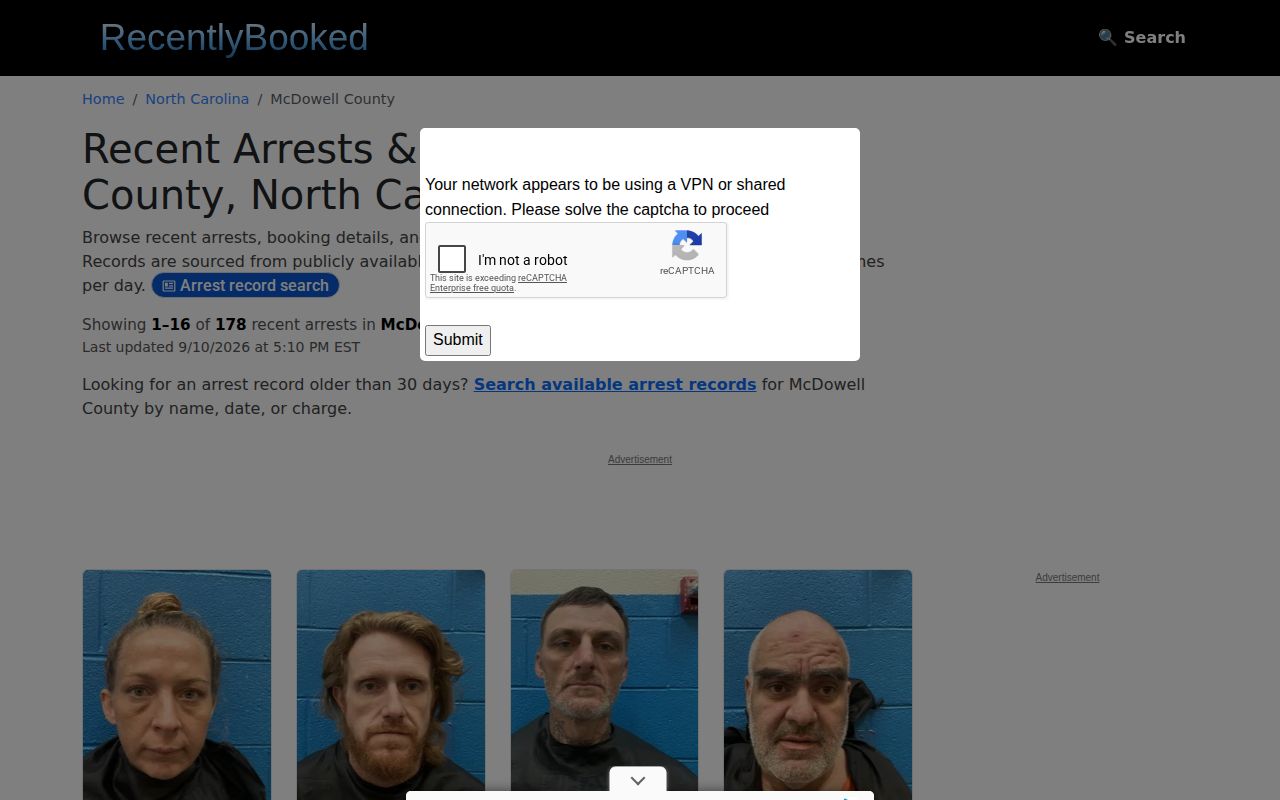
Its dates, images, and update text are third-party copies, so every fact needs official verification.
McDowell Recent Arrests by City
McDowell County contains two incorporated municipalities. Each police department can write an arrest report. But neither city runs the county jail or a separate mugshot feed. The arresting agency's report and the sheriff's booking record stay distinct. Name the agency first. Then follow the person into county custody and the courts.
- Marion Recent Arrests: Marion Police handles city reports, while county detention holds the booking record. Marion also hosts the courthouse.
- Old Fort Recent Arrests: Old Fort Police is the town contact, while the sheriff app and detention unit cover custody.
Nebo and West Marion may show up in addresses, yet the adopted county plan does not list them as incorporated municipalities. An address alone cannot tell you which agency made an arrest. The official record names the agency.
McDowell Arrest Record Field Map
A booking record is built during jail intake. It is not the police report, the warrant, the court docket, or a news story. McDowell fields sit scattered across systems. The sheriff holds intake and custody records. Police may hold the arrest report, the court holds case events and outcomes, VINE tracks notices, and state and federal systems cover their own custody data.
| Field | Meaning |
|---|---|
| Name and identity data | The entered person; a name alone cannot confirm identity |
| Booking date and number | Recorded intake and local identifier, if public |
| Arresting agency | The office named in the record |
| Charges as booked | Intake charges that may later change |
| Bond or release term | A record-specific condition subject to court action |
| Photo | An image may exist without online publication |
| Court case | A separate court identifier and events |
| Release or transfer | A later custody event requiring current confirmation |
- Booking
- Jail intake after an arrest.
- Bond
- A court-set release condition while a case is pending.
- Disposition
- The recorded court outcome.
- Expunction
- A legal process affecting eligible state records.
McDowell Mugshots and Arrest Photos
Photographs are legal at booking in North Carolina under N.C. Gen. Stat. § 15A-502. That law gives the authority, though. It never obligates the county to publish anything. Chapter 132 draws its own line. It lists certain arrest facts as public while treating criminal-investigation records differently. The McDowell County sheriff's site posts no mugshot roster. Its app descriptions promise no photos either. An agency image can still exist while staying off the app or under restriction.
To seek a booking photo, ask the record custodian directly. Provide the full name and the rough arrest date. Include the booking number if you have it, plus the agency that made the arrest. Request an electronic copy. Ask the office to cite the legal basis for any redaction or withholding. A live NCDAC image reflects state corrections rather than the current county booking. BOP offers no public booking-photo field, and VINE handles custody status and alerts.
The official arrest photograph statute spells out when an image may be taken.
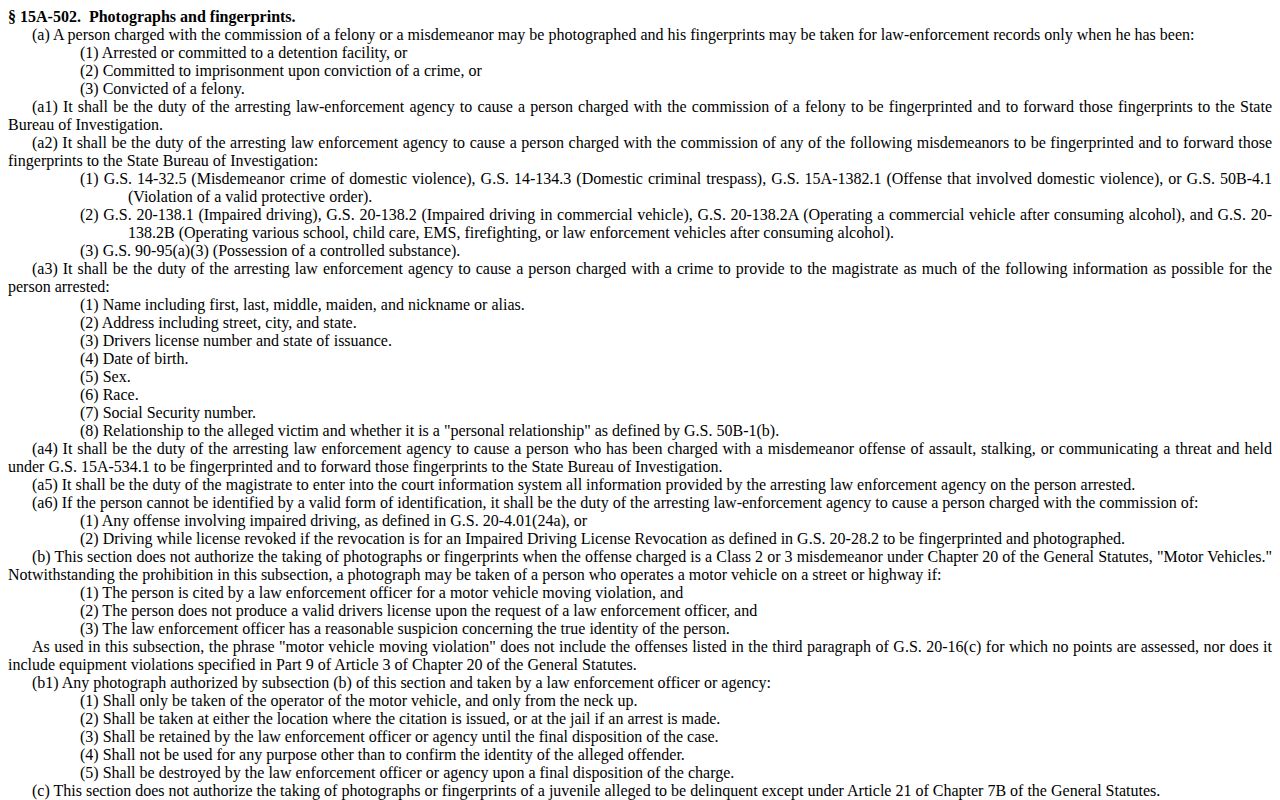
That statute explains why a photo gets made, not any duty to post it online.
Request a McDowell Arrest Record
The Sheriff's Office publishes no dedicated request form or records email. It lists no fixed fee. There is no guaranteed response window. Start in person at 593 Spaulding Road, Marion, NC 28752. Phone contact is 828-652-2235. Detention can be reached at 828-652-2236. Ask staff where to direct a written Chapter 132 request. A precise ask helps. They can sort a police report from an intake sheet, an image, or a custody entry.
- Identify the person, date, agency, and booking number if known.
- Request the booking record and photograph as separate items.
- Ask for electronic delivery and a cost estimate.
- Request the statutory reason for redaction or withholding.
- Check the court record later for the disposition.
Marion Police reports follow a separate route. The city's Public Records Request Form handles Chapter 132 requests, and its directory notes that arrest-report copies carry a small copying fee. Old Fort posts no dedicated police form or set fee, so mail a detailed written request to the town or its Police Department instead.
If a request is denied: find out whether no record exists, a retention period passed, or a confidentiality and investigation rule applies. A withheld photo does not prove there was no booking.
North Carolina Arrest Record Law
North Carolina Chapter 132 serves as the core public-records reference. Section 132-1.4 sets this apart. Criminal-investigation records sit apart from specified arrest facts. Request the exact record and let the agency cite any restriction it claims. Access to a name, an alleged violation, or arrest circumstances is one thing. It does not entitle you to every narrative, witness record, juvenile item, or image.
No statewide anti-pay-to-remove statute appears in North Carolina law today. Bills introduced in 2023 and 2025 are not current law. They should not be described that way. The practical route is to seek expunction when eligible. Correct the record through official channels. Then send proof to each private publisher under its free correction policy. Never assume payment is required to fix an error or honor a court order.
The Judicial Branch expunction page explains how eligible records may be sealed or destroyed. Section 15A-146 covers qualifying dismissed and not-guilty matters, with conditions. Private copies will not update instantly. Secure the official order first, and send it to every private source. Tackle stale search indexing only after the source changes.
McDowell Arrest Warrants and Wanted Notices
The current sheriff's website lists no public most-wanted roster or warrant search. A dated news post may spotlight one wanted person. That is not a lasting county list. The private domain mcdowellsheriff.com sounds official but was excluded as non-official.
North Carolina eCourts Smart Search and the court office offer better footing. A register of actions can show a warrant or summons. Its status may read served, unserved, reset, or recalled. Protected details may not appear. A name-only result needs verification before anyone relies on it. The Clerk can be reached at 828-655-4100; magistrates answer at 828-655-4119. Anyone worried about personal status should contact the court or a lawyer for lawful resolution.
Never confront someone named in a wanted notice. Route tips through an official channel. Call 911 for emergencies only. Private warrant labels can be stale or point to a different person entirely.
After a McDowell County Arrest
An arrest is just one stage. After booking, a magistrate or court may take up release terms. The case then gains its own number and calendar. The McDowell County court page places the courthouse at 21 South Main Street in Marion. Public hours run on weekdays. Smart Search allows queries by name, case number, location, and case type. Open the case summary and full register rather than trusting the first name match.
A register can record service, recall, continuance, plea, dismissal, or judgment. Booking, filing, and disposition dates often differ, and charge wording can shift too. Pending, dismissed, not guilty, pled guilty, and convicted each mean something distinct. When the online record reads unclearly, ask the Clerk.
The official courthouse page supplies access details.
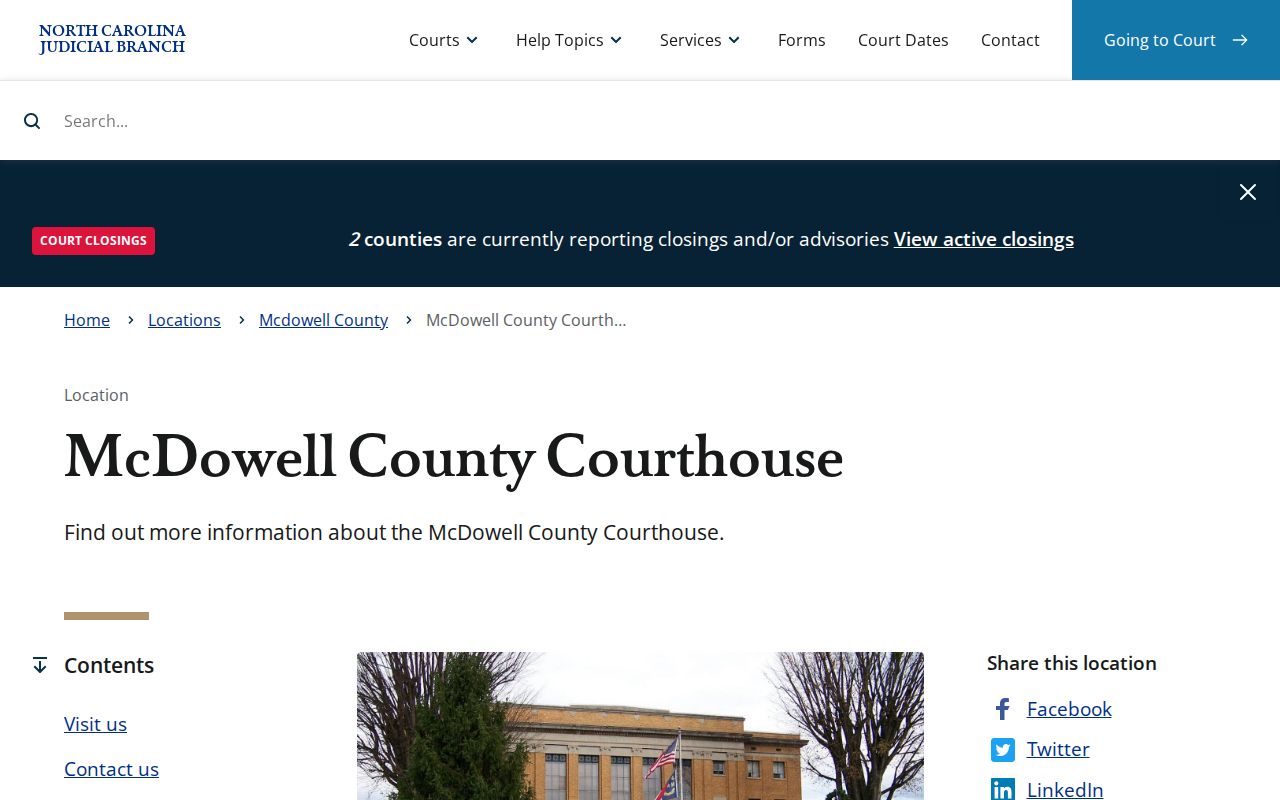
Check the court file, not the first booking entry, for how a case ends.
McDowell Records After County Custody
A county jail is only the first stop. Once McDowell County hands someone over to the state, the North Carolina Department of Adult Correction search becomes the tool that matters. It covers state prison and supervision, not new county bookings. Names work, or a seven-digit offender number. Active and inactive status choices are built in. A clean result there does not rule out a McDowell County arrest, and any photo it shows is a state correctional image rather than a current county mugshot.
Federal custody works differently. The BOP locator tracks federal inmates and carries no booking-photo field. ICE sets its own identity rules. McDowell's jail can hold people for the U.S. Marshals Service, yet no public USMS roster exists for the county. A local booking, a release, and a later state or federal admission are separate custody states, answered by separate sources.
Labels matter here. Keep every identifier tied to its own system, and hold the booking-photo record to the same rule, since one agency's image is never another agency's current photograph.
Older McDowell Arrest Records
Old files and live rosters differ for a reason. The North Carolina sheriff records schedule sets the retention periods that govern both. Arrest-processing tracking may last a single year. Some stand-alone arrest reports carry five. Certain misdemeanor histories run three, while solved felony case histories can bundle reports, warrants, photographs, and dispositions for twenty years. Inmate incarceration records face destruction three years after release or transfer.
None of this guarantees anything. A period says what may be kept, not what is public, retained, or online. A case-file link can shift the series. Give the sheriff, Clerk, or Archives the details. Name the record type, date range, agency, and case number, then ask whether it was retained, transferred, restricted, or lawfully destroyed. Juvenile material needs extra care.
The North Carolina Archives local-government page is the official route.
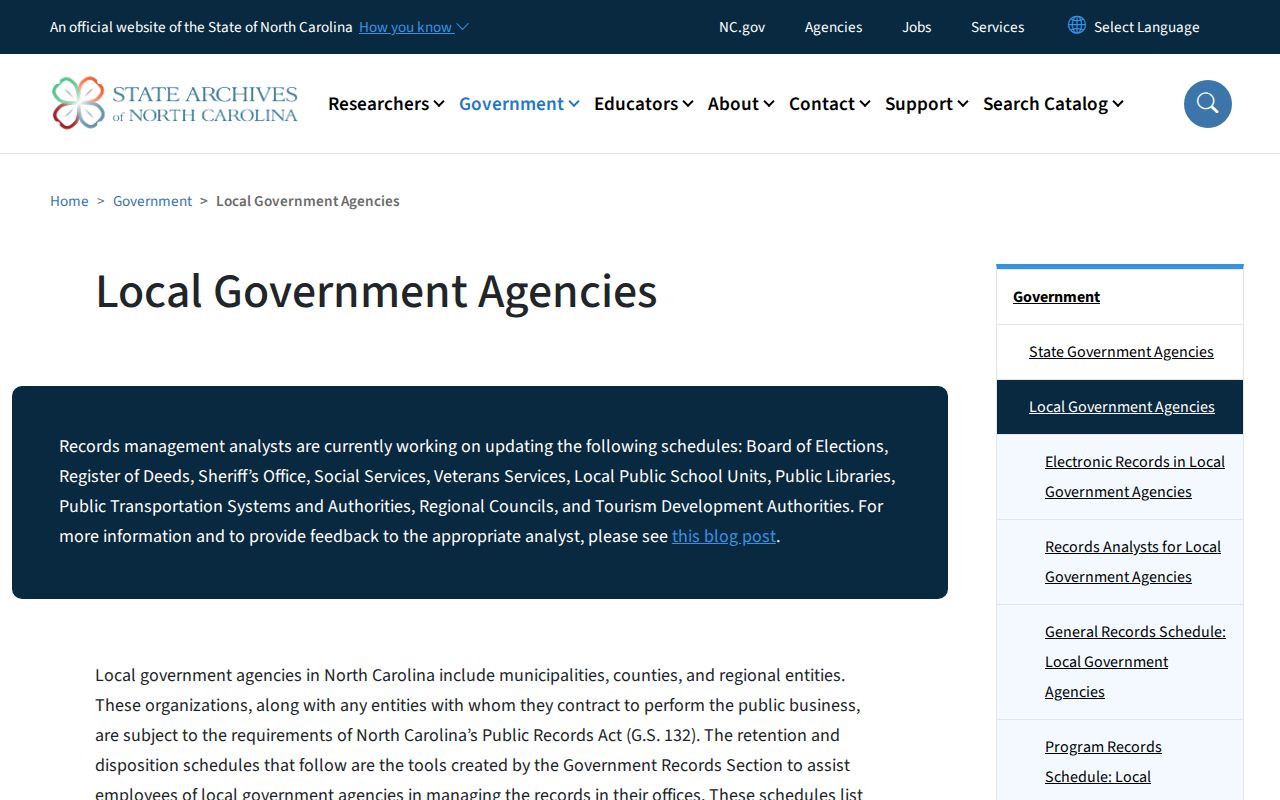
The schedule organizes record series; it does not promise a historical mugshot gallery.